Lauda.ai
Platform that turns what the doctor dictates during the exam into a report ready to sign.
Context
The story
Lauda started at a large imaging clinic in Belo Horizonte. It spent a lot on typists: staff hired only to sit in the room typing everything the doctor dictated during ultrasound exams.
The problem
Besides the payroll and having to manage several employees, the typists weren’t doctors and often made mistakes.
Task
Take the typist out of the loop: turn what the doctor says into a finished report, without depending on anyone else.
What I did
What it is
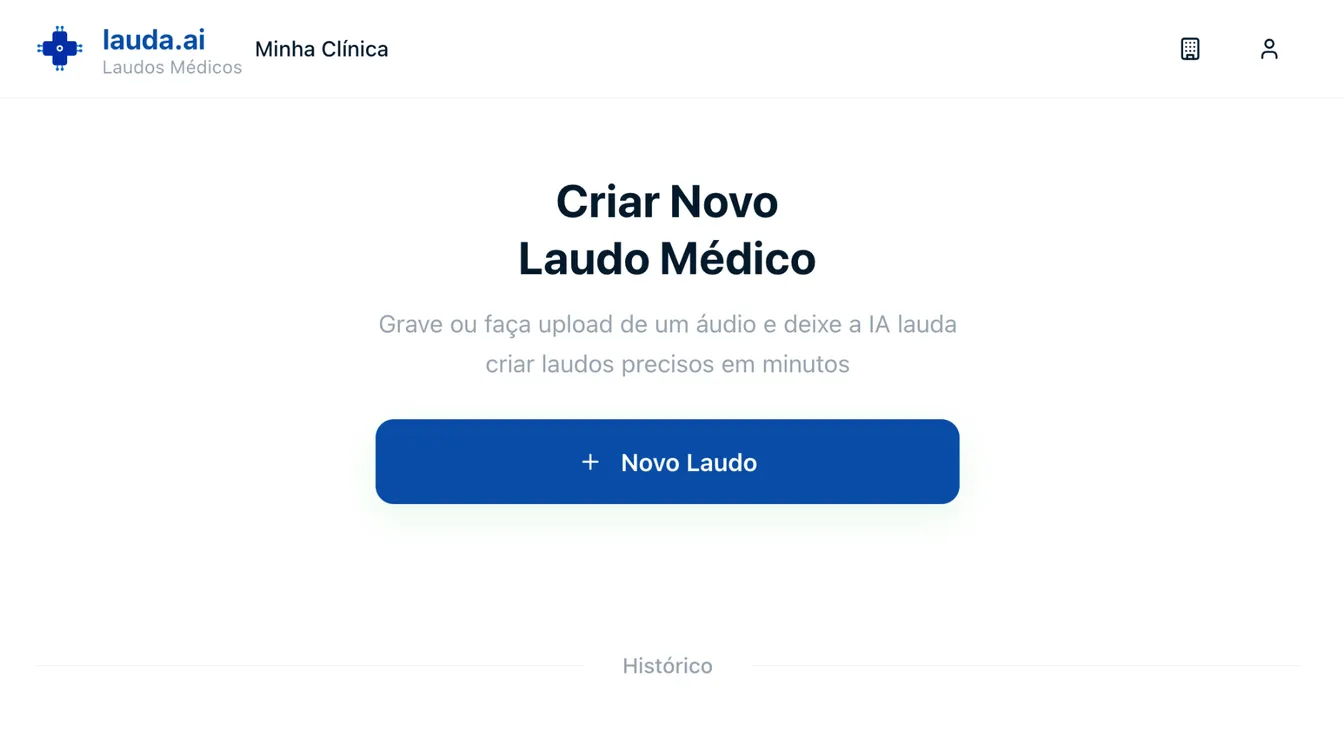
Lauda transcribes everything the doctor says in real time and generates a formatted medical report, ready to print and sign. The AI adapts to medical terms and concepts and improves on its own every time a report is corrected.
How it works
- The doctor dictates the report during the exam.
- The AI transcribes the speech in real time.
- The system builds the report already formatted to the medical standard.
- The doctor reviews it, corrects it if needed and prints it to sign. Every correction teaches the AI.
The versions
V1. The first version that went into doctors’ hands.
V2. The next step: real-time transcription, a report queue and a schedule per doctor. The doctor’s only job was to open the app and start the exam. A single person would be in charge of monitoring the queue of reports and exams.
The validation
We ran a 30-day experiment inside the clinic. We interviewed the doctors, tracked their requests and iterated on the product every day, always shipping something that made it easier for them to use.
Result
The big challenge was integrating with the clinic’s management system, which was very outdated and offered no API integration. We decided to pivot the product to run the whole clinic’s management with AI, but we shut down Genesis Startups before launching the new version.